
Benefits of Mivan Shuttering in Modern Construction Projects
“250 reuses.” That’s what they told me too.
In Mumbai’s high-pressure construction environment, builders face relentless demands: deliver faster, reduce cost, and meet rising quality expectations. Labour availability is unpredictable, material costs are rising, and customers want smooth finishes ready for painting from day one.
Traditional formwork systems—wood, ply, or steel—often fall short in these areas, leading to delays, uneven finishes, and rising rework costs.
Enter Mivan shuttering — an aluminium-based formwork solution that’s changing the rules of the game for mass housing and high-rise projects across India’s urban landscape. Let’s explore why top builders are now turning to this system.
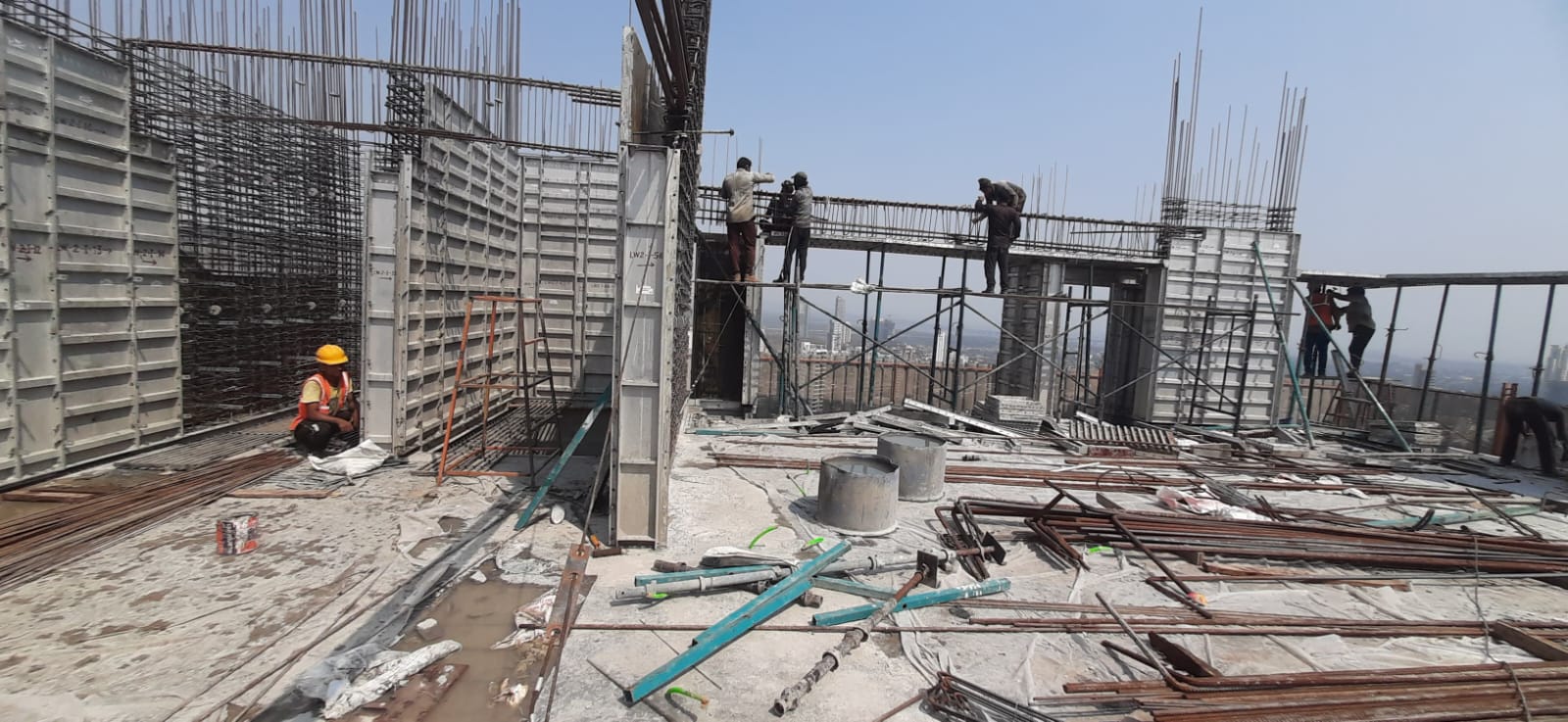
What is Mivan Shuttering?
Mivan shuttering, or Mivan aluminium formwork, is a precision-engineered system developed originally in Malaysia. Unlike conventional shuttering that uses timber or steel sheets, Mivan uses high-grade aluminium panels pre-designed for every part of a building — walls, slabs, beams, columns, and staircases.
It enables a monolithic concrete structure— meaning everything is cast in a single pour, reducing construction joints and improving structural strength.
Each panel is manufactured to suit a project’s architectural design and can be reused across hundreds of slabs, making it ideal for repetitive construction like towers, PMAY, MHADA, and SRA housing common in cities like Mumbai.
Key Benefits of Mivan Shuttering
1. Faster Project Completion
Time is the most expensive resource in construction.
Mivan shuttering supports 7 to 10-day slab cycles, ensuring that one floor can be completed per week under optimal conditions.
Why it matters:
- Reduced construction period = lower project holding costs
- Quicker RERA compliance and possession deadlines
- Early cash flow through timely sales
2. High Reusability
Aluminium panels used in Mivan shuttering are designed for 200 to 250 repetitions with proper handling.
Key impacts:
- Significant cost savings in multi-tower or phased projects
- Lower waste generation vs. conventional formwork that needs frequent replacement
- Simplifies logistics — no recurring orders for ply/steel every few floors
For developers working on several buildings across Mumbai, reusing panels across towers boosts ROI substantially.
3. Superior Surface Finish
One of the standout features of Mivan is its exceptional finish quality.
Benefits include:
- Concrete surface is smooth enough to eliminate internal plastering
- Reduced use of POP or putty
- Consistent alignment and verticality
- Sharp architectural detailing at beam-column joints
For developers working on several buildings across Mumbai, reusing panels across towers boosts ROI substantially.
4. Lightweight Yet Durable
Mivan panels are made of lightweight aluminium, weighing around 18–22 kg/m², making them easy to handle manually.
Why it’s better:
- Reduces dependency on cranes (especially important in Mumbai’s congested sites)
- Increases shuttering speed due to easy manual placement
- Minimizes site accidents and fatigue-related delays
Despite being lightweight, the system is strong enough to withstand lateral pressure of fresh concrete and deliver structurally sound formwork.
5. Minimal Labour Dependency
Mivan reduces site complexity by requiring fewer but better-trained workers.
Key workforce advantages:
- Reduction in skilled carpentry labour by up to 60%
- Faster learning curve for workers
- Less chance of manual errors during shuttering or alignment
This benefit is extremely valuable during times of labour shortages or rising skilled labour costs — a recurring issue in Mumbai's metro zones.
6. Precision & Structural Safety
Mivan delivers millimetre-level precision, resulting in true vertical walls and slabs with uniform thickness.
Structural advantages::
- Monolithic RCC casting provides better earthquake resistance
- Load distribution is optimized across structural elements
- Eliminates weak joints typically found in segmented casting
This makes it suitable for high-rise and coastal constructions where wind loads, seismic forces, and design integrity are critical.
Economic Advantages in the Indian Context
Although Mivan formwork has a higher upfront cost (₹250–₹350/sq.ft), the total cost per square foot reduces drastically when used for 15+ floors or 2+ towers.
Major savings come from:
- Faster project turnaround = quicker return on investment
- Reduced finishing costs (plaster, POP, repainting)
- Lower site labour and supervision costs
- Minimal material wastage = better sustainability compliance
For Mumbai developers under pressure from RERA deadlines and tight project margins, Mivan is not an expense — it’s an investment.
Limitations to Consider
Despite its advantages, Mivan isn’t a one-size-fits-all solution.
Challenges include:
- Higher initial capex (but cost-effective when reused smartly)
- Fixed layout rigidity – not ideal for frequently changing floor plans or unique architectural designs
- Needs careful planning – best suited when architecture and structural plans are frozen in advance
Proper training and supervision are essential to maintain reuse life and finish quality.
When Should You Choose Mivan Shuttering?
Ideal scenarios for using Mivan:
- Residential towers over 10+ floors
- SRA, MHADA, PMAY, and mass housing layouts
- Projects with repetitive layouts and elevations
- Construction in labour-sensitive or deadline-sensitive zones like Mumbai
- Builders focusing on faster sales launches and high customer finish quality
Remember, you’re not just buying panels — you’re buying a reusable asset. How well it pays off depends more on your team than on the metal itself.
Conclusion: Mivan Isn’t a Trend – It’s a Transition
construction industry is no longer about just building structures — it’s about speed, savings, and scale. Mivan shuttering solves core pain points: reducing slab cycle times, improving finish quality, and making large-scale housing projects more profitable.
As construction margins shrink and customer expectations grow, Mivan offers a reliable way to meet both. Whether you're building a single tower or planning a township, this system can transform your execution. <
